Waymark Classics

Classic stories, easier to follow

Sherlock Holmes, Father Brown and other well-loved stories, in the authors' own words but fewer of them, set out in large print so you never lose the thread.

What's in a Waymark book

  • The author's own wordsEach story is shortened, not rewritten. The voice is Conan Doyle's, Chesterton's, Montgomery's or Wells's.
  • Short chaptersGrouped into two or three sittings of twenty minutes or less, read aloud. Any chapter is a good place to stop.
  • A page of who is whoAt the front, and again at the back, so a name is never a puzzle.
  • The story so farA box at the start of every chapter says where the story has got to, and one at the end says what happened.
  • Large printPaperbacks in 16 point type on cream paper, and Kindle editions.
  • Something to finish withThe whole story on one page, a note on the author and a few things to talk about, after the last chapter.

The books

Detective stories

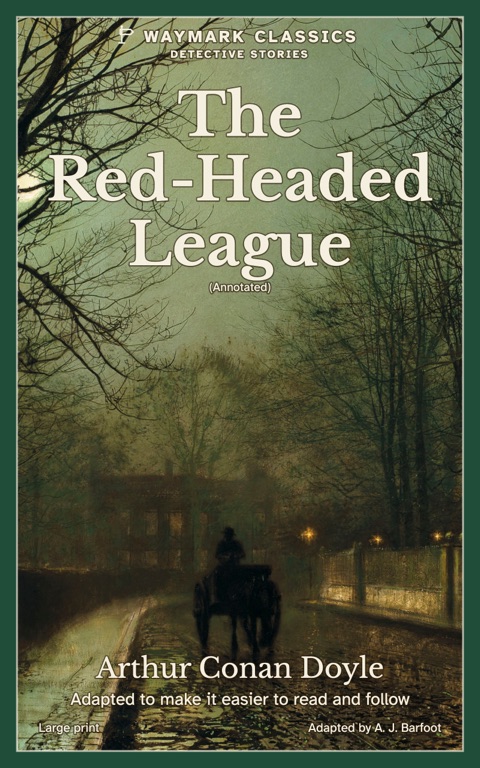
Cover of The Red-Headed League

The Red-Headed League

Arthur Conan Doyle

A London pawnbroker with fiery red hair is paid to copy out the encyclopaedia. Then the League vanishes, and Sherlock Holmes takes the case.

Nine chapters, three sittings

Out now. Paperback on Amazon UK, Kindle on Amazon UK. Also on Amazon.com: paperback, Kindle.

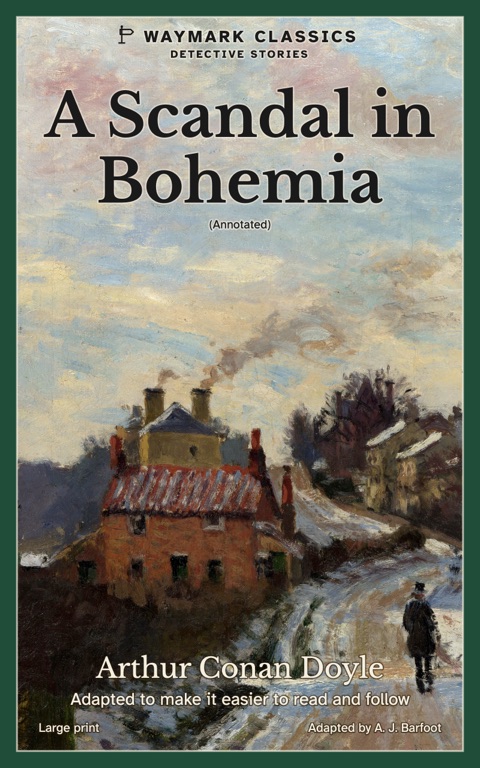
Cover of A Scandal in Bohemia

A Scandal in Bohemia

Arthur Conan Doyle

A king in a mask needs a photograph back from Irene Adler. Holmes has three days, his wits and his disguises.

Eight chapters, three sittings

Coming soon to Amazon, paperback and Kindle

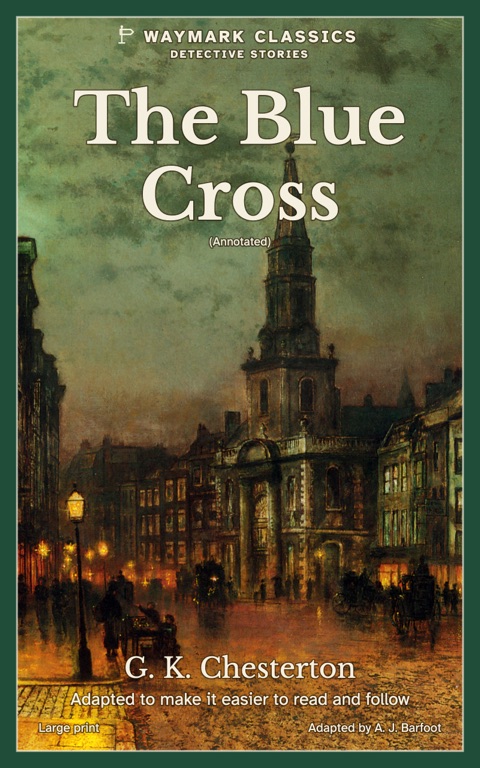
Cover of The Blue Cross

The Blue Cross

G. K. Chesterton

The first Father Brown story. A great detective follows anything odd across London, and wherever two priests go, something strange happens.

Eight chapters, three sittings

Coming soon to Amazon, paperback and Kindle

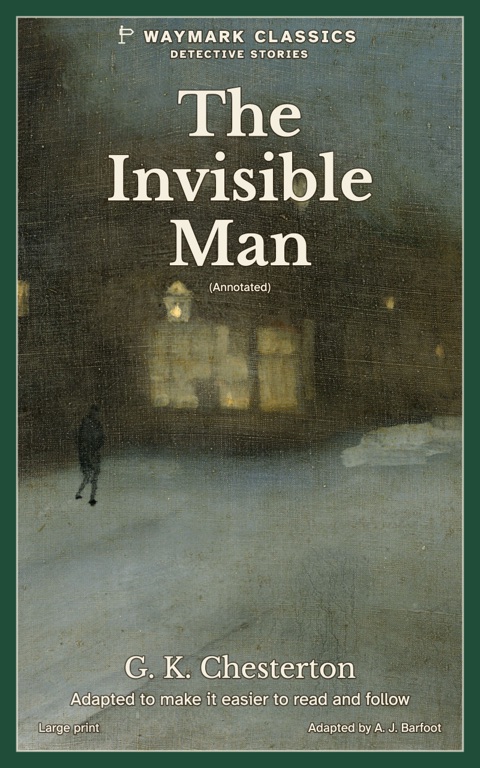
Cover of The Invisible Man

The Invisible Man

G. K. Chesterton

A Father Brown story, not the H. G. Wells novel. Four men watch the only door, and all swear nobody went in. So whose footprints are in the snow?

Eight chapters, three sittings

Coming soon to Amazon, paperback and Kindle

Love stories

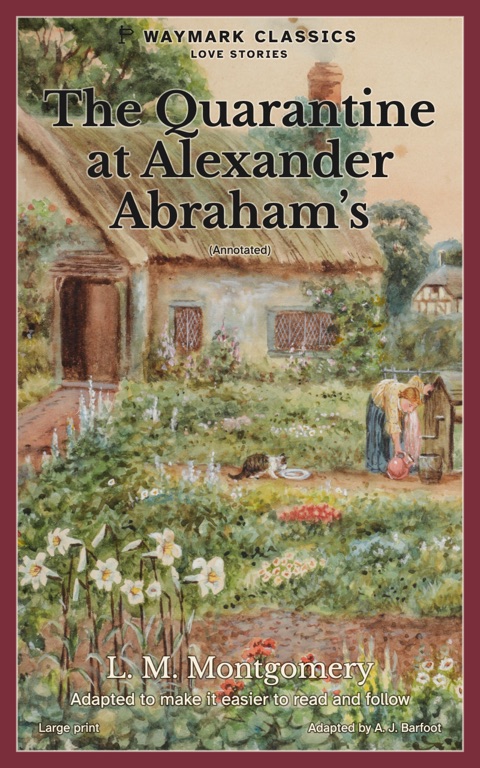
Cover of The Quarantine at Alexander Abraham's

The Quarantine at Alexander Abraham's

L. M. Montgomery

A woman who prefers cats to men is shut in for a smallpox quarantine with a man who can't abide women. Funny, and it ends warmly.

Eight chapters, three sittings

Coming soon to Amazon, paperback and Kindle

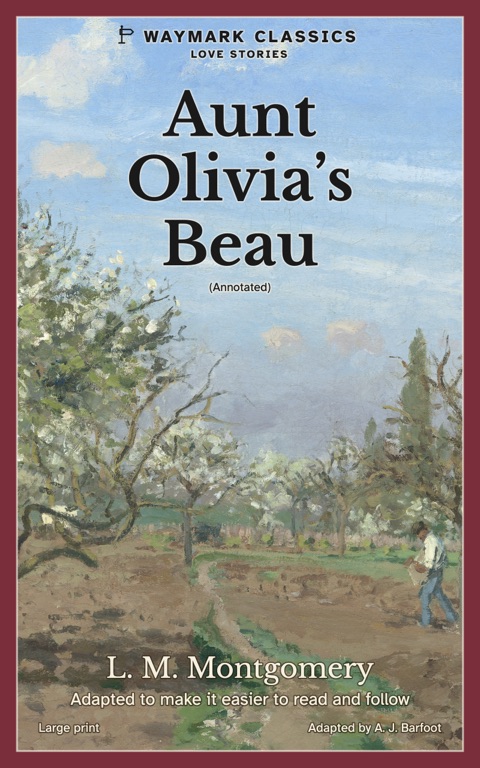
Cover of Aunt Olivia's Beau

Aunt Olivia's Beau

L. M. Montgomery

Aunt Olivia keeps a spotless house. Her beau of long ago is coming home to marry her, and he tracks in mud wherever he goes.

Seven chapters, three sittings

Coming soon to Amazon, paperback and Kindle

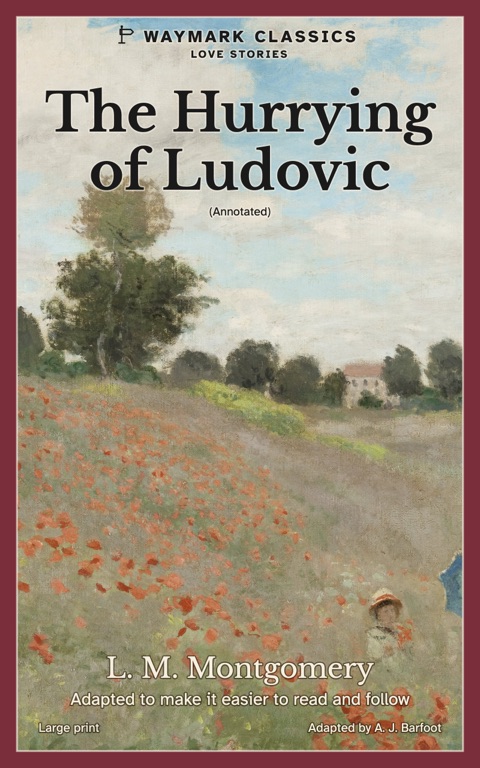
Cover of The Hurrying of Ludovic

The Hurrying of Ludovic

L. M. Montgomery

For fifteen years Ludovic has called on Theodora without asking her to marry him. Two friends decide he needs a push.

Five chapters, two sittings

Coming soon to Amazon, paperback and Kindle

Science fiction

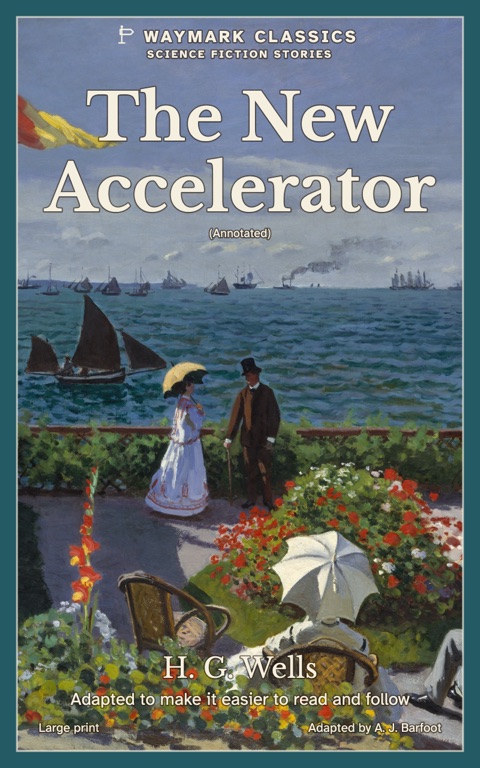
Cover of The New Accelerator

The New Accelerator

H. G. Wells

A professor's new drug makes the world seem to stop. A gentle seaside comedy on a hot August day in Folkestone.

Eight chapters, three sittings

Coming soon to Amazon, paperback and Kindle

For families, carers and care homes

Waymark Classics are for older readers who have always loved a good story, and for anyone who now finds a long book hard to hold in mind, whether through age, memory loss, dementia or Alzheimer's, a stroke, tiredness or any other reason. They are for reading alone, or aloud together with a son, daughter, partner, carer or volunteer, or in a care home group.

They are adult books with proper covers: a period painting, the title and the author. Nothing on the cover or inside names an illness.

What they are

  • Classic stories by authors people already know and love.
  • The author's own words, but fewer of them.
  • Short chapters, with the story so far at the start of each.
  • Large print paperbacks and Kindle editions.
  • For reading alone or together.

What they are not

  • Not the complete original. That is free elsewhere for anyone who wants every word.
  • Not a children's book, a picture book or an activity book.
  • Not "Easy Read" in the UK sense, the picture-led format for people with learning disabilities.
  • Not a treatment or therapy. We make no claim that they help memory or slow anything down.
  • Not for every stage. They suit someone who can still follow a story read to them. Later on, pictures and music often do more.
  • Not modernised. The voice is the author's.

Reading together

  • Read at the reader's pace, and stop whenever they are tired. Every chapter ends at a natural place to stop.
  • Read each opening box aloud, and the closing box when you finish. They do the remembering for both of you. If you carry straight on, you can skip the next opening box.
  • Use the who-is-who page whenever you need it.
  • If something is forgotten, offer a gentle reminder. Don't quiz.
  • The whole story on one page gives the ending away, so save it until after the last chapter.

Care homes, libraries and groups

For several copies, a question, or to tell us how a book went with your readers, email enquiries@antlerforge.com. We read everything, and we would like to hear what worked and what didn't.

Why I made them

My dad has read crime stories all his life. When Alzheimer's came, the reading didn't stop at once. It got harder. Who was that? Where had the story got to? A whole book became too much to hold in mind.

I looked for books he could still enjoy. Most of what I found was made for a later stage: picture books, word puzzles, gentle scenes without much of a story. Some of it read as if it were meant for a child. Dad isn't a child. He's a reader who needs a bit of help keeping hold of the thread.

So I made one. I took a story he would know, kept the author's own words but fewer of them, and broke it into short chapters. A page at the front says who everyone is. A box at the start of each chapter says where the story has got to, and one at the end says what just happened. Large print, a proper cover, and nothing on it to say why.

That became Waymark Classics. I'm not a clinician and these aren't a treatment. They're good stories, made easier to follow.

Tony Barfoot